The Data:
- 9.6% - Year-over-year S&P 500 earnings growth in Q1
- 16% - YTD gain in International Equities vs. 6.2% for the S&P 500
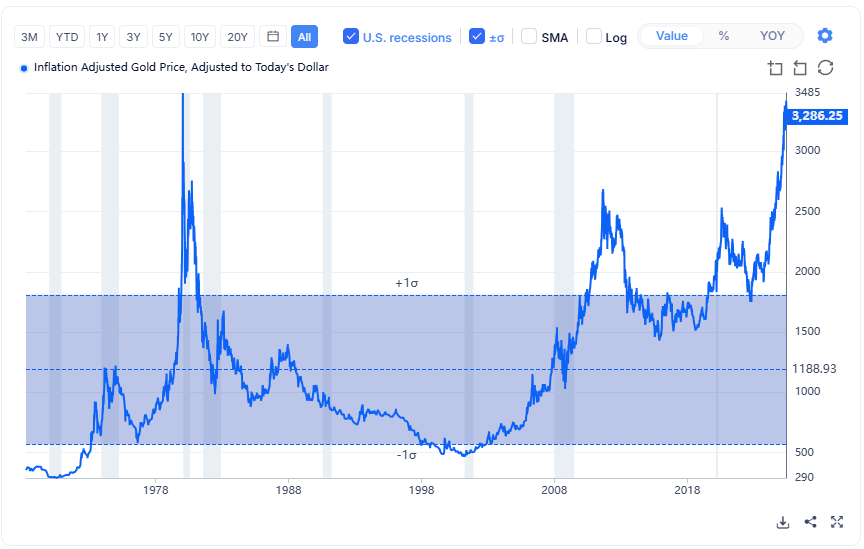
- 29% - Gold’s gain YTD, now at inflation-adjusted all-time highs
Commentary:
June closed the books on one of the most dramatic comebacks in recent market history. After the sharpest correction since 2022 rattled investors earlier this year, equities staged a historic rally over the past nine weeks. The S&P 500, Nasdaq 100, and Dow all rebounded to record highs by month-end, while the VIX - Wall Street’s fear gauge - collapsed at its fastest pace ever. Large-cap indices reclaimed their long-term trends, though Small Caps (Russell 2000) continue to lag, still trading below their 200-day moving average.
Corporate earnings are doing the heavy lifting. S&P 500 profits hit all-time highs in Q1, up 9.6% year-over-year, and that growth is expected to continue through the back half of 2025. While this is great news, it comes with a tradeoff - valuations are starting to look stretched again, which raises questions about how much upside is left without stronger support from economic growth or rate cuts.
Speaking of rates, the Fed has held steady at 4.25-4.50%, but markets are still expecting two cuts - one in September, another in December. Inflation continues to ease, with Core PCE at 2.5% (its lowest since early 2021), but still above the Fed’s 2% target. The wildcard? The labor market. Continued jobless claims are at their highest level since 2021, suggesting some softening under the surface, even as the unemployment rate holds at a relatively low 4.2%.
International stocks have finally turned the tables. After a record 16-year stretch of underperformance, developed markets - especially Europe - are leading the charge in 2025. The Eurozone ETF ($EZU) is up 24% YTD, and the weak U.S. dollar (down significantly YTD) has only amplified those gains for American investors. Meanwhile, the "Magnificent Seven" are no longer marching in lockstep. Nvidia, Microsoft, and Meta are carrying the load, while Apple, Amazon, Tesla, and Google are all negative for the year.
In commodities, gold has stolen the spotlight with a 29% YTD gain, now hitting all-time highs on an inflation-adjusted basis. Silver has surged to its highest level since 2011, and Bitcoin continues its own meteoric rise, topping $111,000 after recovering from a 32% correction earlier this year. These moves reflect a growing appetite for hard assets amid global uncertainty.
And geopolitical risk is back on the radar. Tensions in the Middle East - particularly involving Israel, Iran, and U.S. involvement - have heightened fears of disruption to oil supply. So far, markets have taken it in stride, but any escalation could quickly shift sentiment and pressure oil prices higher. A sustained spike in energy costs would complicate the Fed’s path toward rate cuts and reintroduce inflation risks at an inconvenient time.
Meanwhile, trade tensions are heating up again. President Trump’s 90-day tariff reprieve is set to expire, and negotiations with key partners are under pressure. Canada’s reversal of its digital service tax helped ease tensions temporarily, but the White House has made clear that tariffs could snap back if deals don’t get done. The outcome of these negotiations, along with the progress (or lack thereof) on the proposed “One Big, Beautiful” tax bill, could inject new volatility into markets this summer.
Beneath the headlines, the economy remains mixed. Q1 GDP showed a slight contraction (-0.2%), but the Atlanta Fed’s Q2 estimate sits at +3.4%. Wages have outpaced inflation for 25 straight months, helping consumers stay resilient even in the face of elevated borrowing costs and housing headwinds. Still, affordability is a growing issue. Home prices are up 94% over the past decade - more than double wage growth - and monthly payments have nearly doubled in five years. That’s led to a record gap between sellers and buyers, with cooling prices and flat rent growth hinting at a softening housing market ahead.
Looking ahead:
While it’s tempting to chase the highs or fear the headlines, we continue to believe that discipline and diversification are the best antidotes to uncertainty. Markets are dynamic, and leadership is shifting - across sectors, styles, and geographies. But your plan doesn’t need to pivot with every headline. It just needs to stay intentional and informed.