

He stuck out his big paw. Even if you had thirty years on him, he would still overpower you. Even as I grew and got stronger, I was never a match for Uncle Gerry. Years working for Norfolk Southern had a way of leaving their mark. I miss that handshake more than I thought I would.
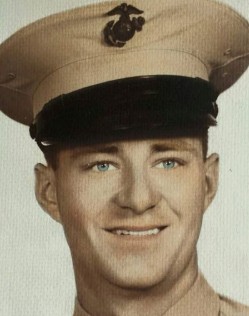
Last October, my uncle passed away. He was a U.S. Marine Corps veteran, a lifelong servant to his church and community, and someone who quietly spent his life honoring others, especially fellow veterans, long before anyone would honor him.
It got me thinking. What did he leave behind? What did he hope to leave behind? And was it what he intended to leave behind?
Since his passing, my wife has attended multiple estate sales, mostly looking for specific items to decorate rooms in our home. Pieces with character. Things with a story. At the end of this month, an estate sale company will walk into my uncle’s house, place a price tag on every item remaining, and sell it to one of the many people who will flood the home over a single weekend.
Strangers will open his drawers. Rummage through his shelves. Load up the very bed frame he once slept on. The house will hum with activity, but none of it will have anything to do with the life that was lived there.
Over the last six months, moments like these have quietly challenged the way I think about things and about what defines us. The house stays behind. The possessions stay behind. Even the memories, in many ways, stay behind. What once felt permanent suddenly feels temporary, almost fragile. It is unsettling to realize how much emotional weight we place on objects that eventually become inventory.
Psychologically, this is where discomfort creeps in. We attach meaning to possessions because they give us a sense of control. They anchor us. They tell a story we can see and touch. But when loss enters the picture, that illusion cracks. What once felt like an extension of someone’s identity is reduced to a price tag and a transaction.
My pastor recently preached through a series called A Different World. One sermon focused on living for comfort versus living for eternity. I am not naive enough to believe everyone shares my worldview, but one line stopped me in my tracks. Summed up – We do not want to buy useful things. We want to buy comfort, or more accurately, things we think will give us comfort.
That line lingered because it rings true far beyond shopping habits. Comfort is not just physical. It is emotional. We buy things to quiet anxiety, to feel safe, to feel successful, to feel like we are progressing. Comfort promises relief, even if only temporarily. And for a while, it works.
But standing in the shadow of an estate sale, comfort feels exposed. The furniture did its job. The house provided shelter. The belongings were useful until they were not. What remains is not the comfort that was purchased, but the life that was lived apart from it.
Loss has a way of forcing better questions. What are we actually building? What are we chasing when we accumulate? And if comfort is the goal, what happens when comfort cannot follow us?
The questions loss forces on us are the same questions we try to ask proactively with the families we serve.
I do not think the lesson is that possessions are bad or that all comfort should be avoided. It is that comfort makes a poor foundation for meaning. When the noise fades and the house empties, what mattered most was not what filled the rooms. It was who filled them.
Experiences like this are why we are so intentional about our Purpose-Built Planning process. Money, at its core, is just another tool. On its own, it does not provide meaning, fulfillment, or lasting comfort. But when it is aligned with a clearly defined purpose, it becomes incredibly powerful.
Our process is designed to help families move beyond simply accumulating more and instead leverage their finances in support of the life they are actually trying to live. The values they care about. The people they love. The impact they want to make.
Because one day, the house will be empty. The possessions will be passed on or sold. But the purpose you pursued, the relationships you invested in, and the legacy you built will continue long after the price tags are gone.
I’m thankful my Uncle Gerry’s purpose was clear, that he pursued it fully, and that his impact cannot be reduced to a price tag. I will miss that big paw.